
Imagine having an expert IT department on call, but instead of just putting out fires, they stop them from ever starting. That’s the simplest way to think about IT managed services. It's a subscription model where, for a predictable monthly fee, a provider gives you round-the-clock monitoring, ironclad security, and expert support. It ends the painful cycle of expensive, reactive emergency calls for good.
This quick comparison shows why Denver businesses are moving away from reactive IT fixes toward a proactive, managed model.
| Feature | Traditional IT Support (Break-Fix) | Managed IT Services |
|---|---|---|
| Cost Model | Unpredictable, hourly rates & project fees | Predictable, flat monthly fee |
| Service Approach | Reactive (waits for things to break) | Proactive (prevents issues from happening) |
| Goal | Fix immediate problems | Ensure long-term stability & uptime |
| Business Focus | Resolves technical disruptions | Aligns technology with business growth |
| Expertise | Access to generalists or specific skillsets | Access to a full team of diverse specialists |
The takeaway is clear: the break-fix model keeps you in a constant state of disruption, while a managed approach creates an environment built for growth.
In Denver’s booming economy—from tech startups in the DTC to established law firms downtown—simply reacting to IT failures is a strategy that no longer works. Your technology is the engine of your business. Downtime isn't just an inconvenience; it’s a direct hit to your revenue and reputation.
Partnering with a provider for IT managed services in Denver is a strategic shift. It turns your IT from a frustrating cost center into a genuine competitive advantage.
Think of traditional IT support as a firefighter—they only show up when your building is already on fire. A managed services provider (MSP), on the other hand, is like the architect, electrician, and security guard all rolled into one. They design a stable system, maintain the wiring to prevent sparks, and watch the perimeter 24/7 to stop intruders before they get inside.
This proactive approach is what allows Denver businesses to thrive. Instead of your team wrestling with server crashes or software glitches, they can focus on what they do best: serving clients, innovating, and growing the company. It’s about making sure your technology works for you, not the other way around.
This model delivers some powerful benefits:
This transition isn't just a local trend; it's a global one. The managed services market is projected to grow from USD 340.59 million in 2024 to an astonishing USD 419.94 billion by 2026. This incredible surge is fueled by businesses saving 30-50% on IT costs while ensuring uptime. You can find more details in this managed services market report.
The real value isn't just in fixing problems faster; it's in creating an environment where fewer problems happen in the first place. This allows businesses to focus on innovation instead of disruption, giving them a crucial edge in a competitive market like Denver's.
So, what should you actually get for your monthly investment in managed IT? A true partnership goes way beyond just answering the phone when something breaks. The heart of any quality IT managed services Denver provider is a set of proactive, essential services that keep your business running smoothly, securely, and without constant interruptions.
Think of it like the specialized crew for a high-performance vehicle. Each person has a specific job, but it's their coordinated effort that guarantees reliability and peak performance on the road. The goal is to move you away from a reactive "fix-it-when-it-breaks" model to a proactive, protected one.
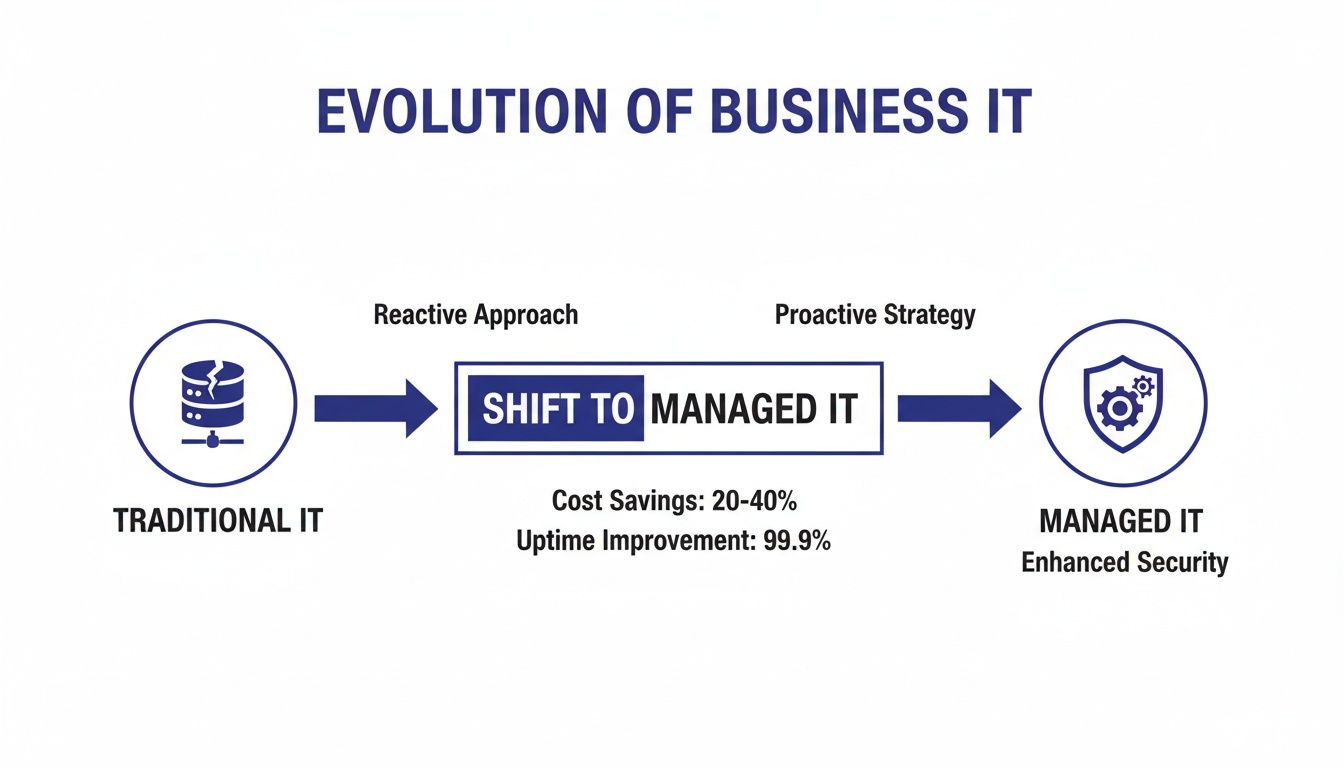
This graphic really nails the shift: you stop letting problems dictate your day and start preventing them from ever happening in the first place.
Imagine your IT provider as a watchtower, constantly scanning your entire network for the slightest hint of trouble. That’s proactive monitoring. Instead of waiting for a server to crash or a critical application to freeze, technicians use sophisticated tools to spot small issues—like a hard drive that’s almost full or some unusual network chatter—and fix them before they can disrupt your work.
This is the absolute foundation of preventing downtime. For a retail shop in LoDo, this might mean stopping a point-of-sale system crash on a busy Saturday, all because their provider spotted and patched a software vulnerability the night before.
In today’s climate, a simple firewall and antivirus program just don't cut it anymore. A core service you should demand is a multi-layered security strategy. This is like having your own team of digital bodyguards protecting your sensitive data from every possible angle.
A solid cybersecurity service isn't just one thing. It's a combination of several critical functions:
This level of defense is non-negotiable for any Denver business handling client information, from a law firm in the Central Business District to an accounting firm managing sensitive financial records.
Let’s ask the tough question: What would you do if all your data suddenly vanished? It could be a hardware failure, a cyberattack, or even a simple human mistake. A robust backup and disaster recovery (BDR) plan is your ultimate insurance policy.
This isn't just about making copies of files. It’s about having a clear, tested plan to get your entire operation back up and running—fast.
Your provider should be running automated, regular backups and storing them in a secure, separate location. The "disaster recovery" part is the actionable playbook they use to restore your systems, minimizing financial loss and protecting your reputation.
Of course, your team still needs a go-to resource for day-to-day IT questions and snags. A responsive, expert help desk is key to keeping everyone productive and frustration-free.
And as more businesses embrace the cloud, managing those environments is a job in itself. A good provider will manage your cloud infrastructure, whether it's Microsoft 365, a private server, or specialized software you rely on. They act as your expert navigators for everything cloud-related, optimizing performance, security, and cost. If you're exploring that path, it helps to understand the nuts and bolts of managed cloud services and their benefits.

A generic IT strategy just doesn’t cut it for specialized professionals. The technology needs of a downtown Denver law firm are worlds apart from those of a creative agency in RiNo. When you're choosing a provider for IT managed services in Denver, you're really looking for a partner who understands the unique software, compliance rules, and daily rhythms of your industry.
A one-size-fits-all approach is a recipe for frustration and risk. An IT provider that speaks your industry's language can move beyond basic support to become a true strategic asset, aligning your technology directly with your business goals. This is where tailored IT support proves its worth.
For Denver's accounting and CPA firms, IT isn’t just a tool—it's the bedrock of their entire operation. During the chaos of tax season, even an hour of downtime can be catastrophic, leading to missed deadlines and shattered client trust. This is where specialized support becomes non-negotiable.
An expert provider zeroes in on three critical areas:
This specialized approach does more than just keep the lights on. It’s about building an IT environment designed for the high-stakes, deadline-driven world of finance. With a focus on 99.5% uptime and ironclad security, firms can often reduce their overall IT expenses by an average of 25-35% just by preventing costly emergencies.
Law firms in the Mile High City operate under a heavy burden of confidentiality and compliance. A data breach isn't just a financial problem; it can lead to severe ethical violations, bar sanctions, and irreparable harm to a firm's reputation. A knowledgeable IT partner is an absolute must.
The right provider will build a technology stack that prioritizes:
For a legal practice, a specialized IT provider acts as a digital custodian, ensuring that every piece of client data is protected, accessible only to authorized users, and compliant with professional rules of conduct.
Denver's vibrant nonprofit sector often faces the challenge of doing more with less. Every dollar spent on IT is a dollar that could have gone toward the mission. This makes efficient, reliable, and cost-effective technology support absolutely critical for success.
A provider experienced with nonprofits understands these unique constraints. They focus on maximizing impact while minimizing costs by delivering:
The US market for managed services is booming, projected to grow from USD 117.84 billion in 2024 to USD 162.52 billion by 2030. This growth is heavily driven by the need for managed infrastructure—a trend especially relevant to Denver professionals who need secure hosting and migrations for their critical applications. In fact, as you can discover from recent industry data, local firms in Denver are adopting these services at rates 15% above the national average, fueled by the city’s dynamic business environment.

Running a business in Denver comes with a few technical quirks that a generic IT plan just can't handle. Two of the biggest hurdles are performance slowdowns and the constant threat of sophisticated cyberattacks. Finding the right partner for IT managed services in Denver means teaming up with someone who gets these local challenges inside and out.
Think about how fast your applications run. If your IT provider's data centers are clear across the country, fetching your own data feels like waiting for a cross-country freight train—there’s an unavoidable delay. That delay, known as latency, can bring critical apps to a crawl and leave your team frustrated.
A provider with a strong local or regional footprint is more like a neighborhood courier. Your data travels a much shorter distance, which means faster response times and a smoother experience for everyone on your team. For Denver businesses that count on real-time cloud access, low latency isn't just a nice-to-have; it's a competitive edge.
This local advantage goes beyond speed. A provider with boots on the ground understands the local business climate, compliance rules, and can be there for hands-on support when you really need it. It’s a level of familiarity a national call center just can't match.
The days of setting up a simple firewall and calling it a day are long gone. Cybercriminals are increasingly targeting Denver businesses with advanced tactics, and a basic setup is like putting a padlock on a bank vault. It’s simply not enough.
Modern cybersecurity is all about layers. It’s like building a fortress with multiple walls, watchtowers, and guards actively patrolling the perimeter.
A proactive security posture means you're not just waiting for an attack to happen. You're actively hunting for threats, training your team to spot danger, and have a clear, tested plan to respond immediately if a breach occurs.
A truly comprehensive defense includes several key pieces:
Demand for this kind of robust security is exploding. With threats like ransomware growing more complex, the North American managed security market is projected to jump from USD 73.57 billion in 2025 to USD 130.06 billion by 2031. Making the switch to a managed security approach can cut breach risks by 50%, and 80% of firms report fewer incidents after they do. To stay ahead, businesses can lean on professional guidance and actionable cybersecurity tips to protect their operations.
Choosing a provider for IT managed services in Denver is one of the most important technology decisions you'll make. This isn't just about hiring a company to fix computers. You're selecting a strategic partner who will protect your data, support your growth, and actually understand your business.
The wrong choice can lead to hidden fees, one-size-fits-all solutions, and endless frustration. To avoid that, you need a clear evaluation process. Think of it like hiring a key employee—you wouldn't bring someone on board without checking their references, understanding their experience, and making sure they’re a good fit. The same diligence applies here. A great partnership starts with asking the right questions.
One of the first things to confirm is whether the provider has a real, staffed presence in Denver. Many national companies advertise "local" services but simply funnel all your support calls to a massive, out-of-state call center. This model often leads to long wait times and technicians who have no clue about the local business environment.
When you’re talking to a potential partner, ask them directly:
A provider with a genuine local presence means faster response times and a deeper understanding of the challenges and opportunities unique to the Mile High City.
Next, dig into their direct experience with your specific industry. As we’ve covered, the IT needs of a law firm are worlds apart from those of an accounting practice or a nonprofit. A provider claiming to serve "all businesses" might not have the specialized knowledge to support you properly.
A true partner will be able to speak your language. They should understand your core applications, the compliance standards you must meet, and the daily workflow of your team.
Ask pointed questions about their security protocols. Don't settle for vague assurances like "we offer robust security." Instead, ask them to detail their approach to threat detection, data protection, and incident response. A confident provider will be transparent about their security stack and how they safeguard client information. Remember, strong IT vendor management practices are crucial for maintaining a secure and efficient operation.
To make this process easier, use a checklist to compare providers side-by-side. This simple tool helps you stay organized and ensures you don't miss any critical details while evaluating your top choices.
| Evaluation Criteria | Provider A | Provider B | Cloudvara |
|---|---|---|---|
| Local Denver Presence & On-Site Support? | |||
| Experience in Your Specific Industry? | |||
| Provides Local Client References? | |||
| Transparent Security & Compliance Details? | |||
| Clear & Documented Onboarding Plan? | |||
| Guaranteed Response Times in SLA? | |||
| Stated Uptime Guarantee (e.g., 99.5%)? | |||
| No Hidden Fees in Contract? |
By filling this out for each potential partner, you can quickly spot the differences and make a much more informed decision.
Finally, get a crystal-clear picture of the onboarding process. A smooth transition is essential to avoid disrupting your business. Ask for a step-by-step overview of their migration plan. How do they ensure all your data, applications, and user settings are moved over without a hitch? A well-documented process is a sure sign of an organized and professional team.
You also have to scrutinize the Service Level Agreement (SLA). This contract defines the provider's commitments to you. Pay close attention to:
Taking these steps empowers you to find a provider that will act as a true strategic partner, not just another vendor. This thorough evaluation ensures your investment in IT managed services in Denver delivers real, long-term value for your business.
You’ve seen why businesses all along the Front Range are making the switch. Partnering with a dedicated provider for IT managed services in Denver turns your technology from a constant headache into a genuine asset for growth. It’s about ditching unpredictable emergency bills for a stable monthly cost, gaining an entire team of experts, and finally securing your business against modern threats.
This proactive approach—built on relentless monitoring, robust security, and deep industry knowledge—is exactly what we deliver. We know the stakes are high for professionals like you. That’s why we stand by our promises of 99.5% uptime, immediate 24/7 expert support, and specialized experience with the critical software your firm depends on every single day.
Reading about superior IT is one thing; experiencing it is another. The best way to understand the real-world impact of a seamless, secure, and responsive IT environment is to try it for yourself, no strings attached. We believe so strongly in the value we provide that we want you to put our service to the test.
We make the transition to better IT simple and straightforward. If you're thinking about a move to the cloud, our process is designed to be as smooth as possible. You can get a head start by reviewing our complete cloud migration checklist to see the key steps involved.
The goal is to give you complete peace of mind. We want you to know your technology isn't just being maintained, but optimized for peak performance and security. This frees you up to focus entirely on serving your clients and growing your business.
Ready to see how a true IT partnership can transform your daily operations? We offer two simple ways to get started:
Start Your Free 15-Day Trial: The best way to know if we're a fit is to use our service. Sign up for a no-risk, no-contract, no-credit-card-required trial and feel the Cloudvara difference firsthand. See how your applications perform and how fast our support team really is.
Schedule a Personalized Consultation: Have specific questions about your industry, current setup, or compliance needs? Book a quick call with one of our cloud specialists. We'll listen to your challenges and give you clear, actionable advice tailored to your firm.
Stop letting IT headaches dictate your workday. Take the next step toward a more secure, reliable, and productive future for your firm today.
Deciding to switch your IT support naturally brings up a lot of practical questions. As a business owner, you need clear, straightforward answers before you commit. We've gathered the most common concerns we hear from Denver businesses when they're thinking about moving to a managed services model.
Our goal is to give you total transparency. This way, you can make a smart decision that’s right for your company, whether you're a growing startup or an established professional firm. Let's get into the details.
This is almost always the first question, and the honest answer is: it depends on the pricing model. Most IT partners use one of two common structures. The real key is finding a plan that fits your budget and gives you predictable monthly expenses, so you can finally end the cycle of surprise repair bills.
Two popular pricing models you'll run into are:
The final price will also be influenced by how complex your network is, the level of security you need, and any special compliance requirements you have to meet.
The thought of a long, disruptive transition is a major headache for many businesses. We get it. But a professional provider of IT managed services in Denver follows a structured migration plan designed to keep downtime to an absolute minimum. The whole process is much faster and smoother than you might think.
A typical migration is a multi-stage process handled almost entirely in the background. The goal is a seamless cutover, often performed after business hours or over a weekend, so your team arrives on Monday morning ready to work without any interruption.
The timeline usually breaks down into a few key phases:
This is a common myth we hear all the time. Many small business owners, nonprofit leaders, and even solo practitioners assume managed services are only for big corporations. The reality is the exact opposite—modern IT services are specifically designed to be scalable.
Scalable plans mean you only pay for what you need right now, with the flexibility to easily add or remove users as your organization grows or shrinks. This model gives small and mid-sized businesses access to an entire team of enterprise-grade IT experts for less than the cost of hiring a single, full-time IT employee. It truly levels the playing field, providing top-tier security and support that was once completely out of reach.
Ready to see how a dedicated IT partner can transform your operations? Cloudvara offers a seamless, secure, and fully managed cloud environment with a 99.5% uptime guarantee and 24/7 expert support. Experience the difference with a free, no-risk 15-day trial today at https://cloudvara.com.