Choosing your 2025 conference is a budget decision, a capacity decision, and a strategy decision all at once. Most firms don’t struggle to find events. They struggle to choose the one that helps them move a priority forward.
That’s the tension behind accounting conferences 2025. You’ve got partner time, manager time, travel spend, and coverage issues back at the office. If the event doesn’t sharpen a service line, improve a workflow, or help you make a better platform decision, it becomes an expensive break from client work.
The better way to evaluate conferences is simple. Start with the problem your firm is trying to solve. If you need stronger tax execution, go where technical depth is highest. If you’re trying to grow CAS, pick the event where workflow, pricing, app ecosystems, and peer conversations are centered. If your firm is modernizing infrastructure, you need more than broad inspiration. You need sessions, vendors, and hallway conversations that help you decide how QuickBooks, Sage, tax software, document management, and remote access will work together.
The conference market is crowded enough that “just attend the biggest one” isn’t a serious strategy. Industry roundups show more than 13 major events on the 2025 calendar, with activity spread across the year and especially dense spring and fall windows, which makes selectivity more important, not less (GetCone’s 2025 accounting conference roundup).
Below are the seven conferences I’d put on the shortlist for firms that care about ROI. Each serves a different kind of practice. Some are broad and leadership-heavy. Some are software-specific. Some are best for tax shops. And some are where progressive firms go when they’re redesigning how the practice works.
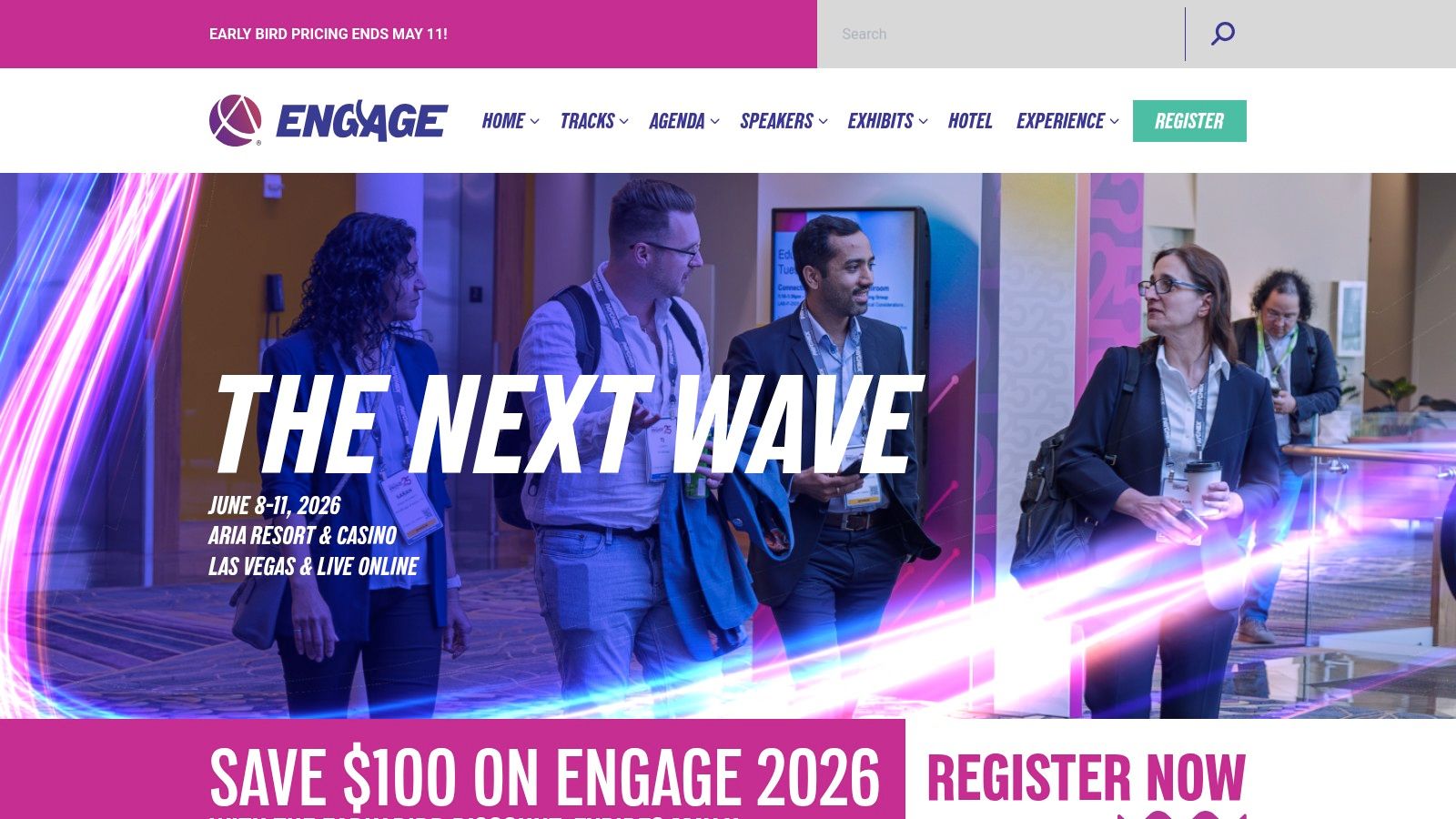
A managing partner approves four registrations. By the end of June, the firm has a stack of notes, a bag of vendor brochures, and no clear decision on what changes first. That is the risk with ENGAGE. It gives firms broad exposure, but broad exposure only pays off if you arrive with a decision agenda.
AICPA & CIMA ENGAGE 2025, scheduled for June 9 to 12 in Las Vegas, is usually the best fit for firms that need one conference to serve several priorities at once. Tax, audit, advisory, operations, leadership, and technology all show up here. For firms weighing service-line growth against platform change, that mix is useful because the trade-offs are visible in one place instead of across three separate events.
ENGAGE is strongest when the leadership team is still sorting out where to place its next bet. A firm may be considering advisory expansion, reviewing workflow bottlenecks, and questioning whether its current stack can support a more distributed team. ENGAGE helps in that situation because the conversations are cross-functional. Partners hear strategy. Operations leaders hear process. Product teams and vendors hear where the friction sits.
It is a strong choice in three situations:
Practical rule: ENGAGE works best when you send a small team, divide session coverage by role, and book a post-event decision meeting before anyone gets on the plane.
For firms tightening operations, ENGAGE is more useful when paired with a serious review of CPA practice management software options. Conference sessions can surface better processes. Execution still depends on whether your firm has the workflow, hosting, and access model to support them, especially if you are standardizing work across offices or remote staff.
ENGAGE can be too wide for firms with a very specific goal. A tax-heavy firm that needs technical updates and nothing else may get faster value elsewhere. A CAS team built around QuickBooks and app integrations may prefer an event with more operational detail and less general leadership content.
The other risk is diffusion. Teams attend too many sessions, collect too many ideas, and return without a ranked list of decisions. Firms that get the best return from ENGAGE usually arrive with a short set of questions: Which workflows are slowing realization? Which systems create the most handoff friction? Which service line needs investment this year? If your team can answer those on-site, ENGAGE becomes a decision forum, not just a learning event.
Scaling New Heights is where many SMB-focused firms go when they want practical improvement, not abstract transformation. If your client base runs on QuickBooks, app integrations, and recurring advisory work, this event is often a better fit than a large generalist conference.
Its appeal is straightforward. The agenda tends to stay close to the operational realities of bookkeeping, client accounting services, workflow design, profitability, and the software stack that supports all of it. That makes it easier to come home with changes your team can implement.
This conference has long been useful for firms that live in the small-business ecosystem. If your team works daily in QuickBooks Online, related apps, and standardized monthly processes, you’re likely to find the content immediately usable.
The biggest strength is specificity. Sessions usually connect advice to tools, and tools to workflows. That matters because tech-stack modernization only works when the process and the software decision are treated together.
A few reasons firms keep this one on repeat:
The limits are just as clear. If your practice is heavily audit-focused or built around enterprise tax complexity, you may find the center of gravity too SMB-oriented. And if your team requires virtual attendance, the lack of that option matters.
What works is sending the people who own recurring delivery. CAS managers, bookkeepers, controller-service leaders, and practice operators usually get more from this event than senior partners who want broad market perspective.
What doesn’t work is attending without a stack map. Before you go, document the tools you already use, the integrations that fail, and the workflows that still rely on manual rework. Otherwise, the app exposure becomes noise instead of direction.
Go to Scaling New Heights if your firm needs better systems for serving small business clients. Don’t go if you’re hoping one conference will also solve enterprise audit strategy or deep tax specialization.
Among accounting conferences 2025, this is one of the more practical choices for firms that want to tighten delivery and grow advisory inside the SMB market.
A partner comes back from a general accounting event with pages of notes and very few decisions. A QuickBooks-focused lead comes back from Intuit Connect with a shortlist: which workflows to rebuild, which apps to keep, and which product changes will affect clients in the next quarter. That is the strong argument for this conference.
Intuit Connect runs October 27 to 29 and fits firms that do a meaningful share of their work inside the Intuit ecosystem. If QuickBooks Online sits at the center of your bookkeeping, CAS, or small business advisory delivery, this event usually produces clearer operational returns than a broader conference.
The value is concentration. Product teams, ProAdvisors, app partners, and firm operators are all focused on the same core question. How do you run client work better on the stack you already use?
That focus helps with decisions that affect margin. Teams can review feature changes, test workflow ideas, compare app connections, and pressure-test service design with peers who serve similar SMB clients. Firms that are also reassessing infrastructure should connect those conversations to their wider software environment, especially if tax and accounting staff rely on cloud-based tax software for remote access and centralized delivery.
Intuit Connect tends to pay off in three areas:
There is a clear trade-off. This conference will not cover the full range of firm strategy, regulatory change, or advanced audit topics. Firms that need broader technical development, including stronger understanding of auditing principles, will need another event on the calendar.
I would send the person who owns process design, not just the internal QuickBooks specialist. Product updates are useful. The larger payoff usually comes from changing how the team uses the platform, how clients are onboarded, and where staff still lose time between systems. For a QuickBooks-centered firm, that is where conference spend turns into real operational improvement.
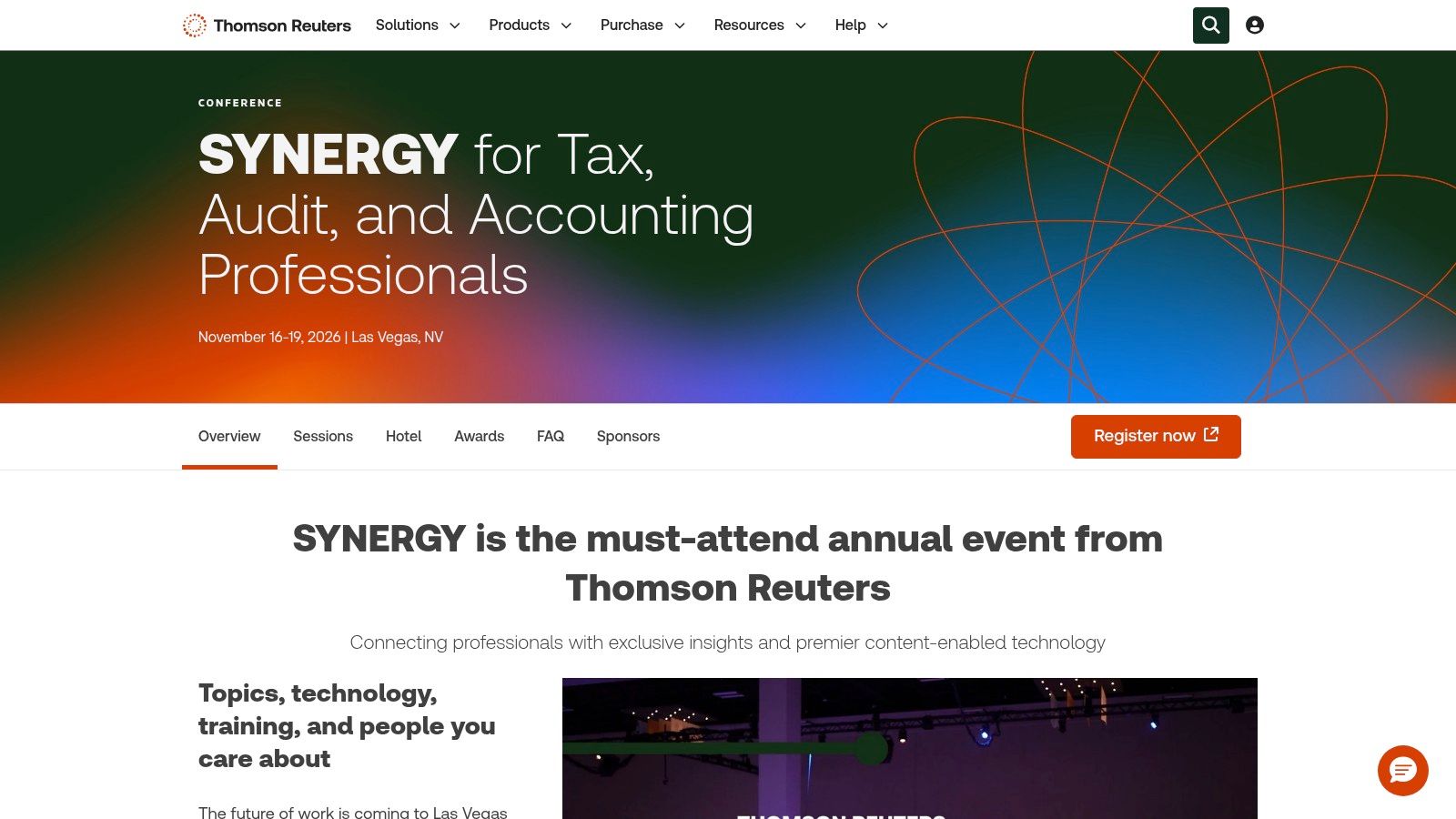
SYNERGY is the kind of conference that delivers disproportionate value if your firm is already on the Thomson Reuters stack. If you use UltraTax CS, GoSystem, Checkpoint, or related workflow tools, broad advice is less helpful than direct product training and implementation guidance.
That’s where SYNERGY usually outperforms general conferences. Instead of hearing generic talk about efficiency, you get closer to the actual settings, workflows, and product decisions affecting your team’s daily work.
The event is built around product-focused learning across tax workflow, audit workflow, and advisory. For firms that need better adoption, cleaner busy-season execution, or more disciplined use of existing software, that matters a lot more than generic inspiration.
It’s also a useful conference for firms trying to connect AI and automation discussion to real systems instead of abstract possibility. In practice, most firms don’t need another general session telling them AI matters. They need to know where it fits into tax prep, research, review, and document flow.
If tax delivery is central to your practice, reliable access to hosted applications matters just as much as training. That’s why many firms pairing conference learnings with infrastructure reviews look at cloud-based tax software environments.
The value of SYNERGY rises when your team already understands the basics and needs more advanced use of the platform. That includes firms refining tax-season execution, audit workflows, research processes, and their understanding of auditing principles as those concepts connect to software-supported delivery.
What works well:
Most firms underuse their tax and audit platforms. A conference like SYNERGY is valuable when the goal is adoption, standardization, and fewer workarounds.
What doesn’t work is attending as a pure shopping exercise if your firm isn’t already serious about the Thomson Reuters ecosystem. In that case, the conference can feel too product-centered.

CCH Connections is another user conference where the return depends heavily on your current stack. If your firm runs CCH Axcess, ProSystem fx, or Wolters Kluwer research tools, this is a practical conference. If not, it’s less compelling than broader options.
That may sound limiting, but it’s often a strength. Specialized conferences cut down the gap between what you hear on stage and what your team can change when they get back to work.
This conference suits firms preparing for tax season, workflow refinement, and product adoption work inside the Wolters Kluwer environment. Roadmap sessions and hands-on product training usually matter more than polished keynote content when your real objective is operational improvement.
The AI angle is also relevant here, especially because accounting teams are shifting AI use toward advisory work. Global 2025 research cited by Fiskl reports that 93% of accountants use AI tools for strategic advisory services, while AI investment is projected to grow at a 42.5% CAGR through 2027 (Fiskl’s 2025 accounting technology research). In a CCH-heavy firm, the practical question becomes how AI-enabled features fit into existing tax, research, and workflow systems.
Security belongs in that conversation too. If your team is expanding automation while giving staff broader remote access to client data, cybersecurity planning for accounting environments becomes part of conference follow-through, not a separate IT topic.
This one is ideal for tax leaders, operations managers, and power users who can bring back standardized methods for the rest of the team. It’s less useful for firms looking for broad profession-wide networking or a wide mix of software vendors.
A practical way to use this conference is to assign attendees by product lane. One person owns tax workflow sessions. Another owns research and knowledge tools. Another focuses on AI-enabled process changes. That turns a vendor conference into a process-improvement project instead of a passive training trip.
The biggest mistake is treating user conferences as optional because the software is already in place. In many firms, the software purchase happened years ago. The process maturity never caught up.

Some conferences are about growth strategy. The IRS Nationwide Tax Forum is about signal. If your practice depends on current tax guidance, representation issues, compliance interpretation, and direct access to IRS perspectives, this event is hard to beat.
The 2025 forum runs in multiple U.S. cities, including Chicago, New Orleans, New York, Orlando, and San Diego, which makes it more accessible than one-location conferences and easier to justify for specialized tax teams.
This isn’t where you go for a sprawling technology expo or broad advisory reinvention. It’s where you go when the quality of your tax work depends on hearing directly from the source and getting your team grounded in current issues.
That focus is the draw. It reduces the noise that often comes with private events. Tax professionals don’t need inspiration during filing pressure. They need clarity.
Good reasons to prioritize it:
For firms hiring or organizing around tax specialization, this also aligns well with the kind of work done by dedicated Tax Accountants, where technical accuracy and current procedural knowledge directly affect service quality.
It won’t give you the same level of vendor exploration as broader accounting conferences 2025. It won’t be the best event for CAS packaging, audit modernization, or app-stack redesign either.
If your immediate risk is tax accuracy, the IRS forum beats trend-heavy conferences every time.
That’s the key trade-off. This is a specialist event. Use it when technical tax execution is the priority. Don’t use it as your one annual conference if your firm also needs major help on technology strategy or advisory growth.
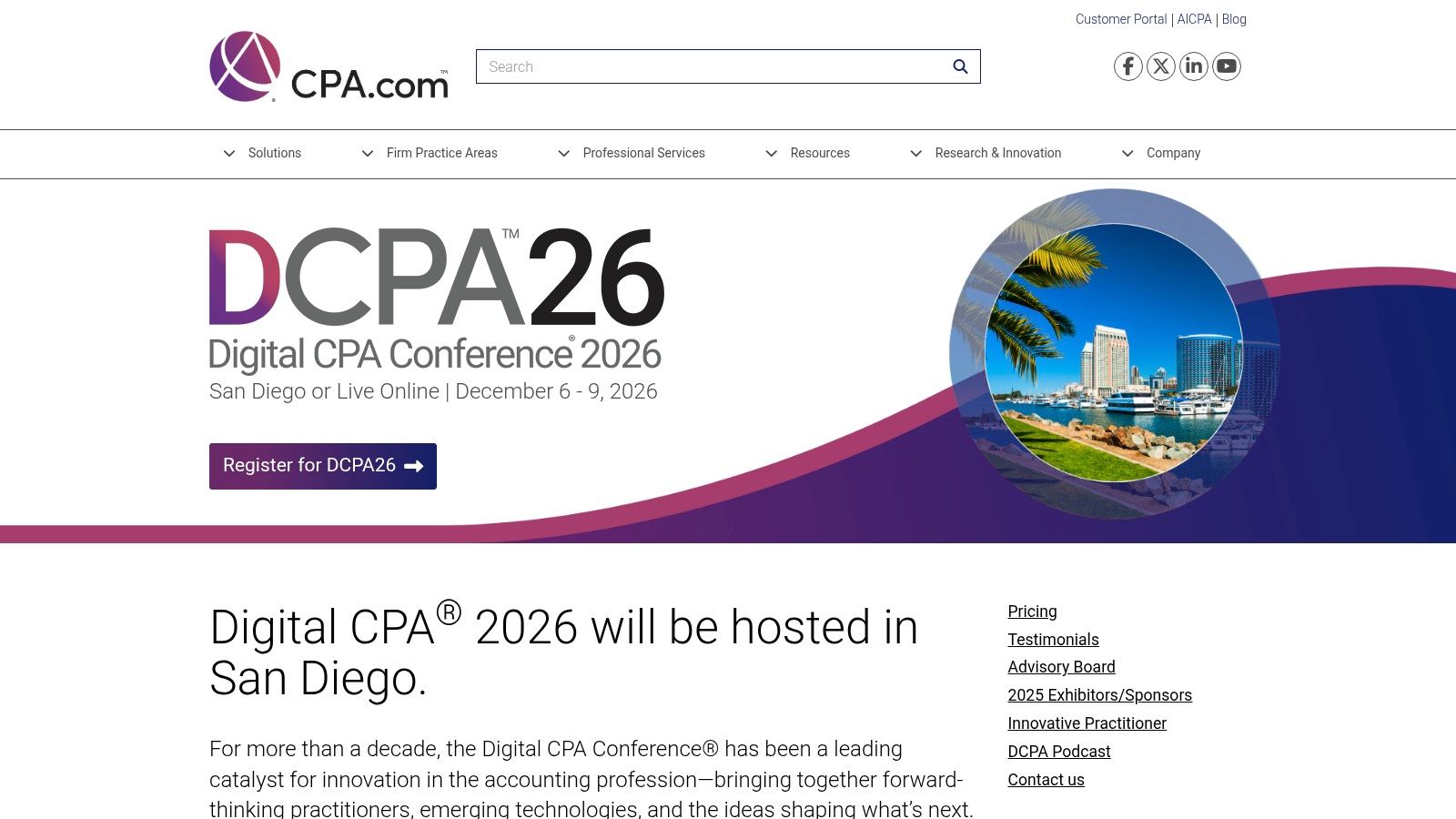
A partner comes back from a conference with pages of notes, a few AI ideas, and no clear implementation path. Six months later, pricing is unchanged, workflows still break across teams, and the app stack is more crowded than before. Digital CPA is a better fit when the goal is operational change, not just exposure to trends.
Scheduled for December 7 to 11 in Washington, DC, Digital CPA has built a reputation around practice modernization. Firms attend to work through CAS design, advisory offers, automation, client experience, workflow changes, and the operating model behind all of it.
This conference earns its place when leadership already knows the firm needs to change and needs help deciding how. Its value is strategic fit. If your priorities are advisory growth, service packaging, AI policy, team structure, or delivery consistency across offices and remote staff, the agenda is usually closer to the decisions sitting on your leadership table than a broader conference would be.
That makes DCPA25 a strong choice for questions such as:
These questions are increasingly urgent because application strategy and infrastructure strategy now affect each other. A firm can design better workflows on paper and still fail in execution if staff access is slow, hosting is inconsistent, or core systems do not work well outside the office. For firms assessing that side of the decision, it helps to review future trends in cloud hosting for 2025. Hosted environments, security standards, and remote performance now shape what process redesign is possible.
Digital CPA is a narrower bet than ENGAGE, and that is often the point. It works best for firms that want to improve how the practice runs, sells, and scales. It is less useful as a single annual event for teams that need broad technical education across tax, audit, and accounting at the same time.
The hybrid format helps firms involve more than one decision-maker. That matters if your managing partner, operations lead, CAS leader, and technology owner all influence the final call on systems and service design.
For firms using hosted solutions or planning a cloud transition, DCPA25 can be especially useful because the best sessions tend to connect strategy with execution. The strongest conference choices do not just inspire change. They help a firm decide what to implement first, what to delay, and which investments will improve margin, delivery quality, and client experience.
| Title | Implementation complexity | Resource requirements | Expected outcomes | Ideal use cases | Key advantages |
|---|---|---|---|---|---|
| AICPA & CIMA ENGAGE 2025 | High, firm-wide practice transformation & tech adoption | High cost/time; multi-day travel; large expo logistics | Broad curriculum, tech insights, extensive networking | Firms pursuing cross-discipline transformation and tech strategy | Very broad topic coverage; major vendor access; high-density networking |
| Scaling New Heights 2025 | Low–Moderate, tactical app/workflow changes | Moderate cost; on-site meals; no virtual option in 2025 | Actionable app-stack optimization and workflow improvements | Bookkeepers, SMB-focused CAS teams, QuickBooks ecosystem partners | Practical, tool-centric sessions; clear pricing; community orientation |
| Intuit Connect 2025 | Low–Moderate, product-specific updates and adoption | Moderate; hands-on sessions; Intuit ecosystem concentration | Up-to-date QuickBooks knowledge and product roadmap access | Firms tightly aligned with QuickBooks/Intuit and ProAdvisors | Direct access to Intuit product teams; hands-on demos; partner networking |
| Thomson Reuters SYNERGY 2025, Tax, Audit & Accounting Professionals | Moderate–High, deep product integrations and workflow changes | Moderate–High; multi-day agenda; premium tiers possible | Intensive product training, AI/automation gains, workflow best practices | Firms using Thomson Reuters platforms seeking deep technical training | Strong platform training (UltraTax, GoSystem); substantive AI/automation content |
| Wolters Kluwer CCH Connections: User Conference 2025 | Moderate–High, platform-specific workflow implementation | Moderate; hands-on clinics and many breakouts; pricing not always posted | Workflow optimization for CCH users and busy‑season preparation | Firms on CCH Axcess/ProSystem aiming to optimize tax workflows | Hands-on product training; roadmap sessions; peer exchange on busy season |
| IRS Nationwide Tax Forum 2025 | Low, compliance updates are straightforward to apply | Low–Moderate; multi-city accessibility; lower price points | Clear IRS guidance, technical updates, direct Q&A with IRS staff | Tax practitioners focused on compliance, representation, and ethics | Direct IRS access; high signal-to-noise on compliance; affordable options |
| Digital CPA (DCPA25), CPA.com & AICPA | High, strategic modernization and advisory practice changes | Moderate; hybrid access (in-person + virtual); curated programming | CAS/advisory growth strategies, AI/workflow redesign, client experience | Firms evolving beyond compliance and prioritizing innovation | Curated, progressive agenda; high concentration of decision-makers and innovators |
A managing partner approves conference travel in January. By July, the team is back with a notebook full of ideas, no clear owner, and no change in how the firm works. That outcome usually starts with the wrong selection criteria.
Choose the conference based on the bottleneck you need to remove in the next 12 months. If the firm needs better workflow, cleaner systems, and a realistic AI plan, go where operators are discussing process design, software fit, and implementation trade-offs. If the immediate need is tax accuracy and current guidance, broad innovation sessions will not help much.
For firms focused on IT modernization, AICPA ENGAGE and Digital CPA are usually the strongest choices in this group. ENGAGE gives firms broad exposure across leadership, firm operations, technology, and vendors. Digital CPA is tighter and more strategy-led. It tends to suit firms that are already committed to redesigning delivery, expanding advisory, or reducing manual work across the practice.
Infrastructure should be part of that decision, even if the conference agenda does not spend much time on it. Firms running hosted environments can evaluate new applications, automation ideas, and process changes with fewer technical constraints in the background. Firms still tied to aging local servers often leave a conference with a good plan and a bad execution path.
If your main goal is CAS or advisory growth, narrow the field quickly. Scaling New Heights is often the better fit for firms that want practical application guidance, app ecosystem conversations, and SMB-focused use cases. Digital CPA is stronger for firm leaders working on pricing, service design, client experience, and operating model changes.
Tax-focused firms should make a different calculation. The IRS Nationwide Tax Forum remains one of the clearest options for current guidance, compliance questions, and direct access to IRS perspectives. If your team also works inside a defined software stack every day, SYNERGY or CCH Connections can produce better operational return because the learning maps directly to the tools your staff already uses.
ENGAGE still has a clear role. It works well for firms that have not fully decided what problem they are solving yet and need broad peer exposure before making a platform, staffing, or service-line decision.
Timing also affects ROI. One conference can set direction. A second event can help with execution. Many firms get better results from sequencing attendance this way than from expecting a single conference to cover strategy, technical training, vendor evaluation, and implementation planning all at once.
Use a simple filter. Match the event to the constraint.
If the firm is struggling with tax accuracy, choose a tax-centered event. If the problem is app sprawl, inconsistent workflows, or low adoption across teams, choose a conference tied to operations and system design. If leadership is reworking the firm around advisory, automation, or cloud delivery, go where peers are willing to discuss what changed, what failed, and what produced measurable improvement.
A conference earns its budget when the team comes back with decisions, owners, and a realistic implementation path. That is the right standard for evaluating accounting conferences 2025.
If your firm is planning conference-driven change, Cloudvara can make the implementation side much easier. Cloudvara hosts the accounting, tax, CRM, document management, and Microsoft applications firms already rely on, with commercial-grade dedicated servers, 24×7 support, a 99.5% uptime guarantee, remote desktop access, two-factor authentication, and automated daily backups. For firms modernizing after events like ENGAGE, SYNERGY, Intuit Connect, or Digital CPA, that means you can focus on workflow, advisory growth, and software adoption instead of managing on-premise infrastructure. If you want to test the environment before committing, Cloudvara offers a free 15-day trial with no contract or credit card required.