Think of a digital workplace solution as the virtual version of your physical office. It’s a complete digital ecosystem that gives your employees all the tools they need to do their jobs effectively, no matter where they are. This is more than just a random collection of apps; it's a strategic way to build a cohesive, secure, and productive environment for a team that isn't tied to a single location.
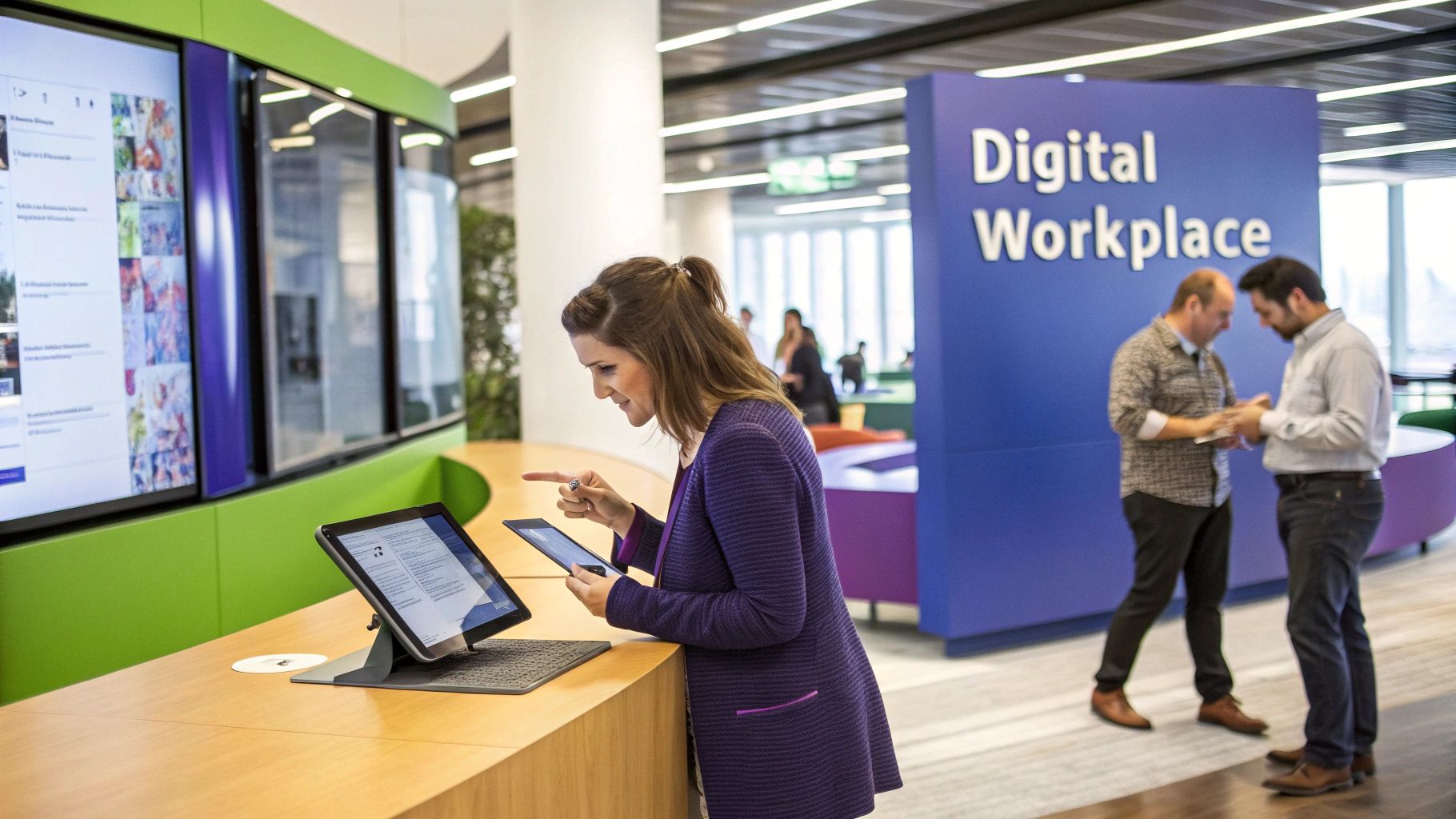
Imagine taking everything in your traditional office—the desks, the meeting rooms, the filing cabinets—and reimagining it for a world without walls. That’s the big idea here. It’s not about just copying the physical office online but transforming it into a digital 'space' that's far more efficient, flexible, and connected.
This shift is a game-changer for any modern business. Instead of commuting to a building, employees log into a unified digital headquarters. Their dashboard becomes their new desk, cloud storage acts as a secure and infinitely expandable filing cabinet, and video conferencing tools are the always-available meeting rooms.
The real magic of a digital workplace is integration. It's not enough to just hand your team a messaging app, a cloud drive, and a project management tool. When those systems are siloed, they create friction. People waste time constantly switching between apps, which kills productivity.
A true digital workplace weaves all these tools together into a seamless fabric. For example, a chat message can instantly become a task on a project board, with the right files from cloud storage already attached. It creates a smooth workflow that supports your team, wherever they’re working from. This is especially true for platforms that pull core functions together, like hosted virtual desktops.
The goal is to move beyond a fragmented set of tools and build a central hub for work. This approach reduces complexity for employees, enhances security for the organization, and creates a consistent experience for everyone.
The move to remote and hybrid work has thrown the need for these integrated environments into sharp focus. You can see it in the market trends. The global digital workplace market, estimated at around USD 48.8 billion, is expected to skyrocket to USD 166.27 billion by 2030, growing at a compound annual rate of 22.8%. You can discover more insights about these market projections and what's behind this massive shift.
This explosive growth points to a simple truth: businesses that invest in a solid digital space are set up for agility, resilience, and growth. They can attract the best talent from anywhere, maintain a strong company culture, and give their teams what they need to do their best work. It's about building an office that's a space for productivity, not just a place on a map.
A great digital workplace doesn't happen by accident. It's not just a random collection of apps and software. Think of it like building a house—you wouldn't just throw bricks, wood, and windows into a pile and hope a home appears. You need a solid foundation and distinct, connected systems that work together seamlessly. The same idea applies when you're building an effective virtual office.
The best digital workplace solutions stand on three core pillars, each with a critical job. When these pieces are integrated, they create a powerful ecosystem that helps your employees do their best work, no matter where they are. Let’s break down these essential building blocks.
The first and most important pillar is communication. In a physical office, people connect naturally in hallways or meeting rooms. A digital workplace has to intentionally create those connection points with tools designed to make talking and sharing feel effortless.
These are the digital hallways and conference rooms of your company. This category includes:
Pulling these tools together weaves a dynamic communication fabric that keeps your teams aligned and connected.
This infographic breaks down the primary benefits you get from a well-structured digital workplace.
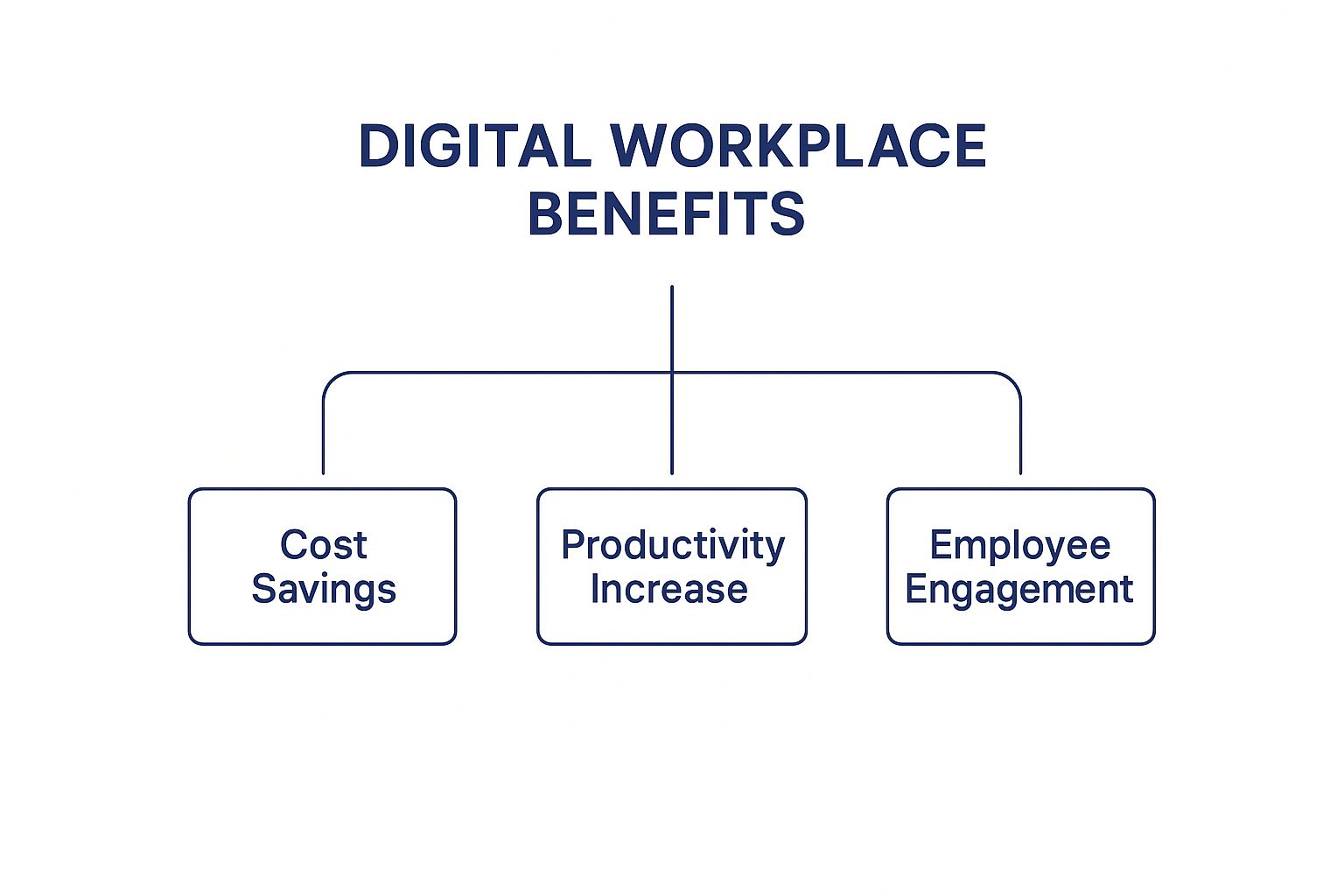
As you can see, these core components directly lead to real gains in cost savings, productivity, and employee engagement.
Once communication is flowing, the next step is to make the actual work smoother. This pillar is all about giving employees the core applications they need for daily tasks and automating repetitive processes to get rid of friction.
The goal is to free up your team’s time so they can focus on high-value, strategic work instead of getting bogged down by administrative chores.
Key elements here include:
When you're setting up the technology, getting the fundamentals right—like the operating system—is vital for performance and security. For instance, comparing the key differences between Windows 11 Home and Pro editions can help you make sure your choice lines up with your business needs.
The final pillar acts as the company’s central brain. With a distributed team, crucial knowledge can easily get trapped in individual inboxes or local hard drives. A solid knowledge management system stops this from happening.
It creates a single, searchable source of truth for the whole organization.
This system ensures that valuable company information—from standard operating procedures and training materials to project histories and best practices—is captured, organized, and easily accessible to everyone who needs it.
This pillar is supported by:
Together, these three pillars aren't just separate silos; they're interlocking systems that support each other. They form the essential structure of a high-performing digital workplace that’s truly cohesive and productive.
Moving past the simple need to support remote work, a well-planned digital workplace brings real, game-changing results to your entire organization. Think of it as an investment that pays you back in productivity, efficiency, and even your ability to attract top-tier talent. This isn't just about adopting new software; it's a strategic move that fundamentally improves how work gets done.
When you strip away the daily frustrations that slow people down—like digging for the right document or waiting on an email reply—you unlock their real potential. The result is a more engaged, productive, and satisfied team that can focus on high-value tasks instead of fighting with clunky processes.
A major benefit of a cohesive digital workplace is the dramatic boost in productivity. When communication is instant, files are all in one place, and workflows are automated, the friction of daily work just melts away. Employees no longer burn precious time toggling between a dozen different apps just to finish a single task.
Picture this: a client request comes in through chat. In a disconnected system, an employee might have to manually create a task in a separate project manager, hunt for related files in a cloud drive, and then email the team for an update. With integrated digital workplace solutions, that chat message can become a trackable task with all necessary files attached in a few clicks, instantly notifying everyone who needs to know.
This smoother experience does more than save time; it directly lifts morale. When employees feel empowered by their tools instead of frustrated by them, their engagement and job satisfaction shoot up. That’s a critical factor in keeping your best people around.
Operational efficiency isn't just about doing things faster; it's about doing them smarter. A digital workplace gives you the visibility and control needed to fine-tune your processes. By automating routine administrative tasks—like invoice approvals or new client onboarding—you cut down on human error and free up your team for more strategic work.
A truly integrated digital workplace acts as your business's central nervous system. It connects people, data, and processes, enabling faster, more informed decisions that keep you ahead of the competition.
This interconnectedness makes your entire organization more agile. When market conditions shift or a new opportunity pops up, a business with a flexible digital foundation can pivot quickly. Teams can be reconfigured, projects launched, and information shared across the company without the logistical headaches of a traditional, siloed setup. Smaller operations can particularly benefit from this newfound agility, which is why understanding the benefits of cloud hosting for small businesses is a great first step.
In a world of distributed work, security can no longer be confined to a single office building. A robust digital workplace actually strengthens your security by centralizing data management and enforcing consistent access controls. With features like multi-factor authentication and role-based permissions, you can ensure sensitive information is protected, no matter where your employees are logging in from.
Finally, a modern digital workplace is a powerful tool for attracting and retaining the best talent. Top professionals today expect flexible work arrangements and the kind of tech they use in their personal lives. Offering a seamless, powerful, and secure digital experience shows that you are a forward-thinking employer invested in your team’s success. The global spending on these solutions reflects this reality. The market, estimated at around USD 33 billion, is forecasted by some to hit USD 153 billion by 2030.
Rolling out a digital workplace is a strategic journey, not just a technical install. Think of it like building a custom home. You wouldn't just order a pile of lumber and start hammering; you need a detailed blueprint that accounts for your family’s needs, the lay of the land, and your budget. In the same way, a solid digital workplace strategy starts with a plan that’s deeply connected to your company’s unique culture and goals.
This roadmap will walk you through the essential phases, from an honest look in the mirror to getting your team on board. Following these steps helps make sure your move to an effective digital workplace solution is smooth and makes a real impact, sidestepping the common mistake of focusing on the tools while forgetting the people who use them.
Before you can build your future, you have to understand your present. The first step is to take a thorough, honest look at how your team currently works. This isn’t just about making a list of the software you use; it’s about finding the hidden friction points that slow people down day in and day out.
Talk to your employees directly. Send out surveys, host focus groups, and have one-on-one chats to ask the important questions:
This process gives you a clear picture of daily frustrations and shines a light on the biggest opportunities for improvement. You’ll get invaluable insights that a simple software audit would never uncover, giving you a foundation for a strategy that solves real-world problems.
Once you've sized up the current situation, you can shift from identifying problems to defining solutions. Your objectives need to be specific, measurable, and tied directly to your bigger business goals. Vague targets like "improve collaboration" just won't cut it. Instead, you should aim for concrete outcomes.
For instance, a clear objective might be: "Reduce the time spent on manual invoice processing by 40% within six months by implementing an automated workflow." Another could be: "Increase employee engagement survey scores related to communication by 15% in the next fiscal year."
Setting these clear benchmarks does two things. First, it gives your project a definite direction and purpose. Second, it provides a tangible way to measure your return on investment (ROI) after implementation, proving the value of your digital workplace initiative to leadership.
As you map out your digital workplace strategy, mastering effective financial management is key for a sustainable rollout and operation. It will help you build a stronger business case for the investment. A detailed plan for technology adoption is also crucial; you can create a more robust framework by building a cloud adoption strategy that lines up with these goals.
Now it’s time to choose your tools. With a clear picture of your needs and objectives, you can evaluate potential platforms much more effectively. The trick is to look for solutions that integrate cleanly with each other. The last thing you want is a "Frankenstack"—a clunky collection of disconnected apps that just adds more complexity.
Prioritize platforms that offer a unified experience, bringing communication, project management, and knowledge sharing into one intuitive hub. Think about scalability, too. The platform you choose today must be able to grow with your business tomorrow. Run pilot programs with small teams to test how things work and gather feedback before you commit to a company-wide rollout.
This is arguably the most important step of all. You can have the best technology in the world, but if your team doesn't embrace it, the entire project is a failure. Change management isn't something you tack on at the end; it has to be woven into your strategy from the very beginning.
Create a solid communication plan that explains the "why" behind the shift, highlighting how it will make employees' lives easier. Build a great training program that works for different learning styles, offering a mix of live workshops, on-demand video tutorials, and easy-to-find help guides. Finally, find and empower "champions" in each department—enthusiastic users who can offer peer support and encourage others to get on board. By putting people first, you ensure your new digital workplace becomes a true strategic asset, not just a bunch of software.

When your office isn't just one building anymore, your security perimeter isn't either. The old model of a strong wall around a central office is completely obsolete. Today, the new perimeter is every single employee's device, wherever it might be. This shift demands a smarter, more flexible approach to protecting your company’s most valuable information.
The main challenge is that data now lives far beyond the controlled environment of an office network. It's on laptops in coffee shops, personal mobile phones, and unsecured home Wi-Fi networks. This distribution creates a ton of new vulnerabilities, making it essential for modern digital workplace solutions to have security woven into their fabric, not just bolted on as an afterthought.
Security is understandably a top concern, especially with widespread remote access to sensitive data. It’s fueling major investments in cybersecurity, with large companies leading the charge. You can read the full research on digital workplace security trends to see just how businesses are tackling this challenge head-on.
Protecting a distributed workforce starts with a multi-layered defense strategy. Think of it less like a single fortress wall and more like a series of checkpoints and armored guards that protect data on its journey. The goal is to make it incredibly difficult for unauthorized users to gain access, even if they manage to slip past one layer of defense.
This modern approach involves several core practices that work together:
One of the most effective security models for a digital workplace is Zero Trust. The name says it all: "never trust, always verify." Instead of assuming a request from inside the network is safe, a Zero Trust model treats every single access request with suspicion until it is verified.
In a Zero Trust framework, identity is the new perimeter. It doesn't matter where you are logging in from; what matters is proving you are who you say you are, every single time.
This is where practices like Multi-Factor Authentication (MFA) become non-negotiable. MFA requires users to provide two or more verification factors to gain access, like a password and a code from their phone. It’s a simple but powerful barrier that can stop the vast majority of account takeover attempts.
By combining these ideas, you can build a secure digital workplace that protects your data while empowering your team. For a deeper dive, explore these 12 essential cloud security practices for businesses to really fortify your defenses.
Your digital workplace isn’t a destination you arrive at and call it a day. It’s a living, breathing ecosystem that has to grow right alongside your business. The tools and strategies that are effective now will need to bend and adapt to whatever challenges pop up tomorrow.
Building a truly “future-ready” digital workplace is all about creating a foundation that’s flexible, intelligent, and designed around the employee experience. It’s about moving past just handing out a box of tools and instead creating an environment that anticipates needs, smooths out friction before it even happens, and empowers your team to thrive through constant change.
The next big leap forward is folding artificial intelligence (AI) into the mix to take care of routine, time-sucking tasks. Imagine a workplace where AI doesn't just automate workflows but also serves up personalized insights to help people manage their time and focus on the work that really moves the needle. This isn’t science fiction anymore; it’s quickly becoming a core part of modern platforms.
Here’s where we’re seeing the biggest gains:
This intelligent layer transforms the digital workplace from a passive toolkit into an active partner in getting things done. It helps create a more personalized and supportive environment for every single person on your team.
A future-ready digital workplace is a strategic asset for business agility and growth. By embracing intelligent automation and focusing on a seamless user experience, you prepare your organization to not just survive but lead in any work environment.
At the end of the day, the goal is simple: create a digital space where your team can do their best work, without being held back by clunky technology. An integrated, secure, and user-friendly solution, like the platform offered by Cloudvara, connects all the dots and provides a foundation that is both stable and flexible.
This ensures your business is ready for whatever comes next—whether that’s a shift in market demands, a new model for working, or the next wave of technology. By investing in a solution built for the future, you empower your people to be more connected, productive, and engaged, no matter what challenges come their way. That’s how you build a workplace that’s truly ready for anything.
Switching to a modern work environment naturally brings up a lot of questions. We've gathered the most common ones here to give you clear, straightforward answers about building a digital workplace and making it work for your business.
What's the real difference between a digital workplace and a remote work setup?
It's easy to mix these two up, but they're fundamentally different. A remote work setup is really just about location—it describes people working outside a central office. It often relies on a patchwork of separate tools like email, chat, and video calls to keep things moving.
A digital workplace, however, is a complete strategy. Think of it as your virtual headquarters, an integrated digital ecosystem where everything and everyone comes together. It’s less about where you work and more about how you work, creating one seamless, secure, and efficient environment no matter where your team is.
How exactly do digital workplace solutions make employees' lives better?
They improve the employee experience by cutting out the daily friction that slows people down. Instead of forcing employees to jump between a dozen different apps just to do their jobs, everything they need is in one unified hub.
This simple change reduces frustration, saves a ton of time, and lets people focus on meaningful work instead of fighting with clunky technology. When information is easy to find and collaboration feels effortless, you get a direct boost in both satisfaction and engagement.
Can a small business actually benefit from a digital workplace?
Absolutely. In fact, small businesses often gain the biggest competitive advantage. A digital workplace lets a small, nimble team operate with the power and efficiency of a much larger organization.
It gives you access to enterprise-grade tools without the massive cost of on-premise hardware, tightens up your security, and helps you attract top talent who expect modern flexibility. By centralizing everything, a digital workplace sets a small business up to scale smoothly and effectively.
How do I measure the ROI of my digital workplace?
Measuring the return on your investment comes down to tracking both hard numbers and softer, but equally important, improvements.
You’ll want to keep an eye on a few key indicators:
By tracking these metrics, you can paint a very clear picture of the financial and operational value your digital workplace is delivering.
Ready to build a digital workplace that empowers your team and secures your data? Cloudvara delivers an all-in-one cloud hosting solution that centralizes your applications on a secure, scalable platform accessible from anywhere. Start your free 15-day trial to experience the difference at https://cloudvara.com.