Picture your entire firm—every client file, invoice, and conversation—running smoothly from a single, secure hub online. That’s the real power of cloud-based practice management software. It’s less like a tool and more like your firm's central command center, accessible wherever and whenever you need it.
Think of your old, traditional software like a massive filing cabinet bolted to the floor in your office. It's clunky, needs constant upkeep, and you have to be physically there to get anything out of it. Worse, if there's a fire or flood, everything inside is gone. That's the reality of on-premise systems, where your data and software live on a local server you own and have to maintain.
Cloud-based practice management software, on the other hand, is like having a Fort Knox-level digital vault managed by a team of experts. The software and your data aren't stuck on one computer; they’re hosted on powerful, remote servers you access securely over the internet. This model completely changes how professional service firms work, tearing down the physical walls that limit productivity and security.

One of the biggest headaches with old-school systems is the dreaded "data silo." The accounting team's numbers are walled off from client management's notes, creating friction, mistakes, and painful communication gaps. Cloud software demolishes these silos and creates one single source of truth for everything the firm does.
This centralized approach solves a ton of common pain points:
This shift isn't just a tech upgrade; it's a fundamental change in your business model. It lets your firm become more nimble, responsive, and resilient by bringing everything together in one secure, accessible place.
At its heart, using a cloud-based platform means you're subscribing to a service instead of buying a product off the shelf. Your software provider handles all the messy, complicated backend work—security patches, server maintenance, data backups—so you can focus on what you do best: serving your clients.
This service-based approach is a cornerstone of modern cloud solutions for business, giving firms access to enterprise-grade technology without the enterprise-level price tag. The result is a far more efficient, secure, and scalable foundation to build your firm's future on.
It’s one thing to talk about cloud based practice management software in theory, but it’s another to see how its specific features turn a firm’s daily chaos into a well-oiled machine. These platforms are far more than digital filing cabinets. They're powerful engines built with interconnected tools designed to automate tedious work, strengthen client relationships, and ultimately, boost your bottom line.
Let's get past the buzzwords and look at the core components that actually run a modern professional services firm. Each feature is like a specialized instrument in a master toolkit, and they all work together to build a more efficient, resilient practice.
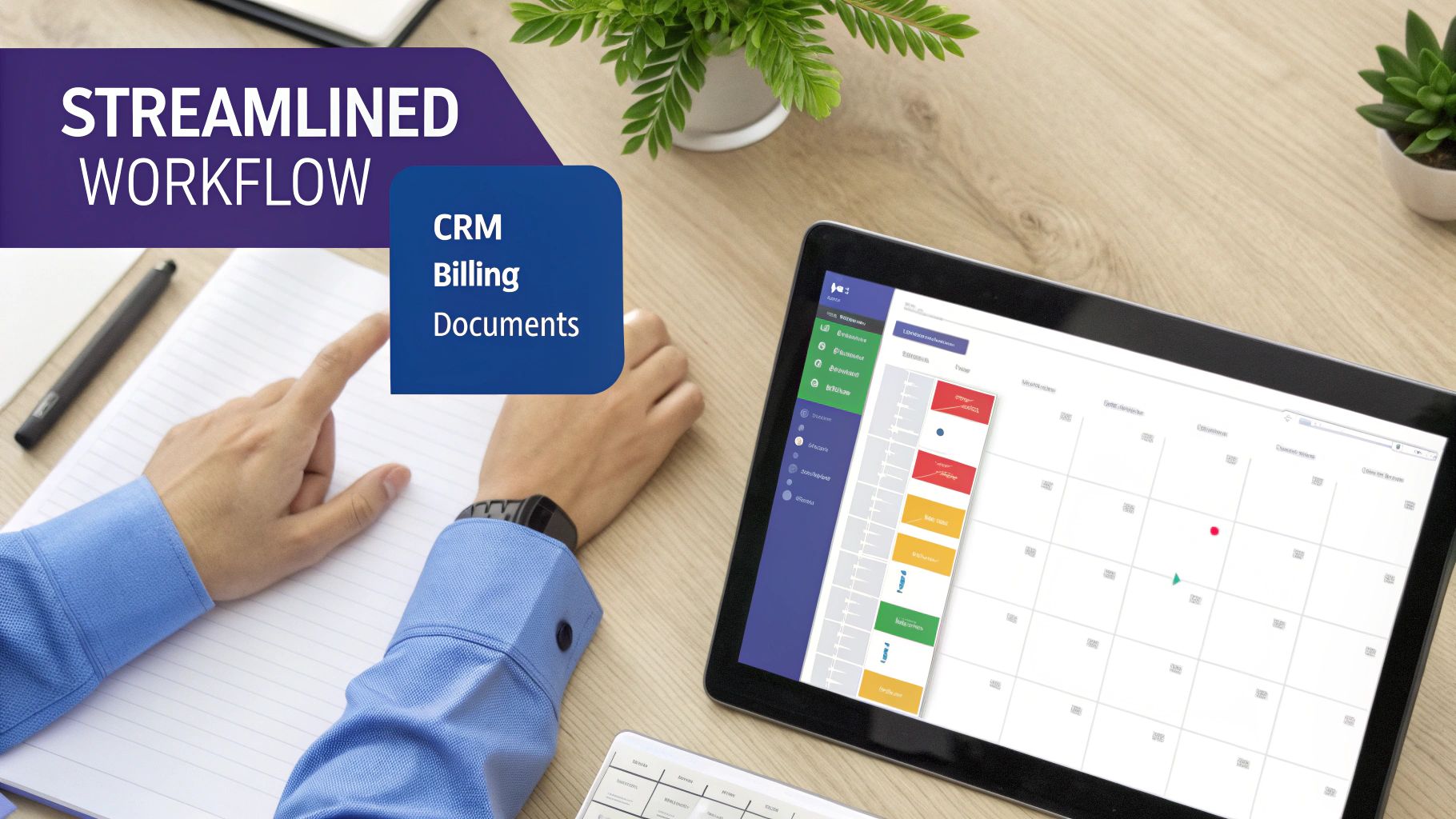
At the heart of any service business is its client list. A built-in Client Relationship Management (CRM) system acts as the foundational layer of your software, creating a central hub for every single client interaction you have.
Think about the old way: client info scattered across spreadsheets, lost in email threads, and jotted down on sticky notes. It was a recipe for disaster. With an integrated CRM, every phone call, email, meeting note, and document is logged in one place, accessible to the entire team in real-time. This transforms client service from a reactive guessing game into a proactive, informed strategy.
Let's be honest—chasing payments and manually creating invoices are huge drains on your firm’s time and energy. Cloud based software automates this entire workflow, dramatically shortening the time between finishing the work and getting paid.
Here’s where the magic happens:
This shift frees up your administrative staff to focus on higher-value work, moving them from tedious data entry to strategic financial oversight. It also gives clients a professional, transparent, and easy way to pay you.
The real goal of automated billing isn’t just to send invoices out faster. It’s to create a frictionless financial relationship with your clients, which builds trust and encourages them to pay on time.
We’ve all lived through the nightmare of version control. A law firm sending out an old draft of a contract or an accounting firm working from outdated financials can have serious consequences. Centralized document management puts a stop to that risk for good.
Every file is stored in a single, secure location. Instead of emailing attachments back and forth—creating a dozen different versions—team members collaborate on the same master document. This ensures everyone is always working with the most current file. Plus, robust permission controls let you decide who can view, edit, or share sensitive information, which is critical for maintaining client confidentiality. To better protect your firm's critical information, you can explore comprehensive strategies for cloud-based document management that align with industry security standards.
Missed deadlines and scheduling conflicts aren't just minor annoyances; they can damage your firm's reputation and even lead to malpractice claims. An integrated calendar and task management system links scheduling directly to specific client matters and projects.
When a new task is created, you can assign it to a team member, link it to the relevant client file, and set a deadline that automatically appears on everyone’s calendar. This creates a crystal-clear view of the team’s workload, project progress, and critical upcoming dates. It turns a collection of individual schedules into a coordinated, firm-wide plan, making sure nothing ever falls through the cracks.
Moving to cloud based practice management software is more than just an IT upgrade—it’s a core business decision. It fundamentally reshapes how your firm operates, making it faster, more responsive, and ultimately more profitable in a crowded market.
Think of it as the strategic engine that drives everything else. It directly impacts your ability to serve clients better, grow smarter, and operate more efficiently than competitors still wrestling with clunky, on-premise systems. The real payoff goes far beyond convenience; it touches every part of your strategy, from who you hire to how you keep clients happy.
The old way of working—chaining everyone to a physical office to access files and software—is a huge strategic liability. It’s not just outdated; it’s holding you back. Cloud based practice management software tears down those walls, giving your team the freedom to work from anywhere.
Picture this: a senior accountant finalizing a crucial tax return from their home office during a snowstorm. Or a paralegal pulling up case files on a tablet moments before a courthouse hearing. This isn't a perk anymore; it's what modern professionals expect.
This kind of flexibility delivers a few powerful advantages:
Productivity grinds to a halt when people are waiting for files or, worse, working from outdated versions. Cloud software fixes this by creating a single, dynamic workspace where your entire team can collaborate on the same client matter at the same time.
An attorney can be drafting a contract while a paralegal adds exhibits and a partner reviews the billing details—all inside the same client file, simultaneously. Every change is saved and visible instantly. This completely eliminates the nightmare of version control and the endless back-and-forth emails. Everybody is always on the same page.
The real power of cloud collaboration lies in its ability to break down internal silos. It fosters a more cohesive team environment where information flows freely, leading to faster decision-making and better client outcomes.
One of the biggest strategic wins is the ability to grow your firm without the massive, painful expense of new hardware. With an on-premise server, expansion means buying bigger machines, planning for downtime, and navigating complex installations. It’s a headache.
Cloud based practice management software scales with you effortlessly. Need to add a new attorney or open a satellite office? It’s as simple as adding another user to your subscription. This agility lets your firm pounce on growth opportunities without being held back by its own IT infrastructure. It's this kind of scalability and reliability that’s driving the market’s explosive growth. The global practice management system market was valued at $14.45 billion in 2024, with cloud-based solutions leading the charge.
On top of that, this model flips your spending from unpredictable capital expenses (CapEx) to stable, predictable operational expenses (OpEx). Instead of getting hit with a surprise $20,000 server replacement bill, you have a consistent monthly fee that’s easy to budget for. That financial predictability frees up cash flow, allowing you to invest in other areas of your business. Of course, internal efficiency is only half the battle; firms also need to leverage modern and effective law firm marketing techniques to bring in new clients.
Picking a new cloud based practice management software is a high-stakes decision. This isn’t just about buying a tool; it’s about choosing a partner that will shape your firm’s day-to-day rhythm for years. The right platform should feel like a natural extension of your team, aligning with your workflows, client needs, and future goals.
The process can feel like a mountain to climb, but breaking it down into manageable steps makes all the difference. A methodical approach ensures you make a choice based on deep understanding, not just a flashy demo.
Before you even glance at a vendor’s website, you need to look inward. What specific problems are you actually trying to solve? The first step is an internal audit to separate your absolute "must-haves" from the "nice-to-haves."
Get everyone in a room—partners, paralegals, accountants, and administrative staff. Map out your current workflows from start to finish. Where are the bottlenecks? What repetitive, soul-crushing tasks are eating up everyone’s time? This exercise gives you a crystal-clear picture of your operational pain points.
Your goal here is simple: create a definitive checklist of core requirements. This list will be your compass, keeping you focused on what truly matters and preventing you from getting distracted by features that don't solve your core problems.
Generic, one-size-fits-all software is a recipe for frustration in professional services. The legal, accounting, and nonprofit worlds have unique compliance, billing, and reporting demands that are completely non-negotiable. The software you choose has to be built for your industry from the ground up.
For example:
Trying to force a generic platform to work is like trying to fit a square peg in a round hole. You'll waste countless hours on manual workarounds, completely defeating the purpose of getting new software in the first place.
With your needs clearly defined, you can start looking at vendors. This is where your prep work really pays off. Use a standardized checklist to compare each option side-by-side, looking far beyond just the feature list.
Here are the key areas to dig into:
The market for these solutions is booming. The global practice management system market is expected to jump from $17.02 billion in 2025 to a massive $40.14 billion by 2034. That means more choices, but it also makes it critical to pick a stable partner who will be around for the long haul.
Ultimately, the software you choose is tied directly to the environment you host it in. To make sure your foundation is as solid as your new software, check out our guide on how to choose a cloud provider.
Picking the right cloud based practice management software is a huge win, but the journey doesn't stop there. A powerful tool is only as good as its rollout. Moving from your old system to a new cloud platform needs a clear, strategic plan to make the switch smooth, get everyone on board, and keep daily operations running without a hitch.
Think of implementation less like flipping a switch and more like building a bridge. You need a solid foundation, careful construction, and a clear path for everyone to cross. If you rush it or plan poorly, you’ll end up with frustrated staff, messy data, and a tool that never lives up to its promise.
Your firm’s data is its lifeblood—client records, financial histories, case files. Moving it is the most critical and delicate part of the whole process. This isn’t just a copy-and-paste job. It’s a golden opportunity to clean house and start fresh with organized, accurate information.
The migration process breaks down into a few key steps:
A clean data migration sets you up for success from day one, so your team can actually trust the information in the new system. For a detailed guide on navigating this step, this comprehensive cloud migration checklist will walk you through it.
The goal of data migration isn't just to move files. It's to transfer institutional knowledge cleanly and accurately, ensuring a seamless continuation of client service without missing a beat.
Even the most intuitive software is useless if your team doesn’t know how to use it. Real training is more than a one-off demo. It's about empowering each person based on their specific role. A partner uses the software completely differently than a paralegal or an administrative assistant.
Customize your training to focus on role-specific workflows. A partner probably needs to master high-level reporting and dashboards. An accountant needs a deep dive into the billing and invoicing modules. This targeted approach makes the training far more relevant, boosting confidence and getting everyone to actually use the new tool.
Your firm has processes that already work. Don't force your team to abandon them for a generic software workflow. Instead, customize the platform to mirror your firm's unique operations. This could mean setting up custom fields, creating specific report templates, or automating the multi-step tasks that are part of your secret sauce.
Finally, it’s time to schedule your "go-live" date—the official switch. Make sure you have dedicated support from your software vendor on standby to tackle any immediate problems. After launch, keep the lines of communication open. Gather feedback from your team to make ongoing tweaks, ensuring the cloud based practice management software continues to fit your firm like a glove.
For any professional firm, keeping client data safe isn't just a good practice—it's an ethical and legal mandate. Handing that sensitive information over to a third-party server might feel like a leap of faith, but modern cloud based practice management software is often far more secure than the typical server sitting in your office closet.
Think of it this way: that local server is like a safe in your back room. You control it, sure, but it’s exposed to physical risks like theft or fire and demands constant, expert attention to ward off cyberattacks. Top-tier cloud providers, on the other hand, operate more like Fort Knox—they’re massive, purpose-built digital fortresses with teams of security experts on duty 24/7.
It helps to understand the layers of protection that keep your data safe. Reputable cloud platforms don’t rely on just one defense; they build their security on several key pillars that work together to create a formidable shield against unauthorized access.
These foundational security measures include:
If you want to go deeper on protecting your digital assets, our guide on how to implement effective cloud security solutions is a great next step.
The infographic below shows the key steps for getting started, from moving your data over to launching your new system.
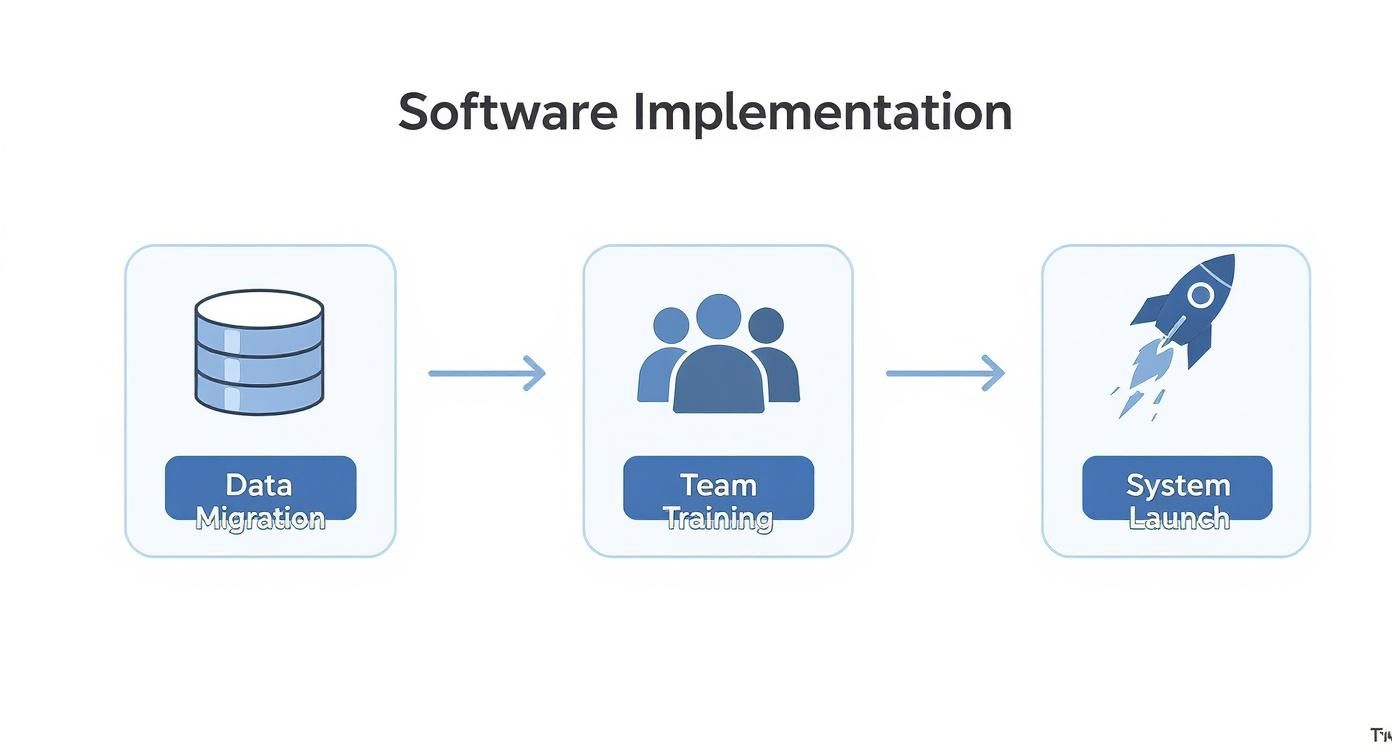
This process shows how a well-planned implementation, beginning with secure data migration, creates the foundation for a successful switch to the cloud.
Meeting regulatory standards like HIPAA for healthcare data or GDPR for European client information is absolutely non-negotiable. The best providers of cloud based practice management software build their platforms with these rules in mind from the ground up, undergoing rigorous third-party audits to certify their compliance. They provide the secure framework your firm needs to meet its own legal obligations.
Choosing a compliant cloud provider means you're not just buying software; you're partnering with a specialist who shares the responsibility for protecting your data and your firm's reputation.
The market for these platforms is booming, which reflects a growing trust in their security and effectiveness. The global cloud-based practice management software market hit an estimated $6.5 billion in 2023 and is projected to reach $12 billion by 2028. Much of that growth is driven by industries with the strictest data-handling requirements. Discover more insights about this growing market on marketreportanalytics.com.
By offloading the heavy technical burden of security and compliance, you free up your firm to focus entirely on what it does best: serving clients.
Even when the benefits are clear, it’s completely normal to have a few last questions before you make the leap. Let's tackle the most common ones that come up when firms consider moving to cloud based practice management software.
This is always the first, and most important, question. The short answer is yes—in fact, it’s almost certainly safer than it is right now. Reputable cloud providers invest millions in security infrastructure, far more than any single firm could justify. They have entire teams of cybersecurity experts on staff, plus sophisticated tools like end-to-end encryption and 24/7 threat monitoring.
Think of it this way: your on-site server is like a high-quality safe in your office. A top-tier cloud platform is like Fort Knox. Your data is far better protected inside their specialized, frequently audited environment than on a local machine vulnerable to everything from a burst pipe to a simple break-in.
Worries about the migration process are common, but modern providers have turned it into a well-oiled machine. It’s a partnership between your firm and the software vendor’s implementation team, not something you have to figure out on your own.
The process usually breaks down into a few key stages:
It definitely requires some planning and effort on your part, but it's a structured project designed to get you started on the new platform with clean, accurate data.
"The biggest fear is always data loss during migration, but with a good vendor and a proper plan, that risk is incredibly low. The real focus should be on data quality before you make the move."
Most cloud based practice management software runs on a Software as a Service (SaaS) model. This simply means you pay a predictable subscription fee, typically on a per-user, per-month basis.
This approach is a huge shift from the old way of doing things. Instead of a massive upfront capital investment in servers and software licenses, you have a manageable operational expense. Budgeting becomes much simpler, and you're only paying for the seats you're actually using.
Ready to bring your firm’s operations under one roof and unlock a new level of efficiency? Cloudvara offers a secure, reliable cloud hosting environment for all your essential applications. Get seamless remote access and dedicated 24/7 support with a solution built for your needs. Start your free 15-day trial today and experience the difference yourself.